 PiscesTop
At a glance
| City | Tokyo, Japan |
|---|---|
| Region | Tokyo |
| Duty headline | registration and licence tax plus acquisition tax |
| Authority | Legal Affairs Bureau |
| Focus | comparing localities by commute, schools, and resale depth on a map |
| App | JUNO on iPhone and web |
Use JUNO
JUNO helps you buy, sell, and broker property with AI-assisted listings, map search, document verification guides, and deal flow in one app, for cities worldwide.
To apply this page to your own situation, join juno free and work through map search and localities in Tokyo: JUNO guide with your own numbers in front of you.
What belongs on a Tokyo pin besides price?
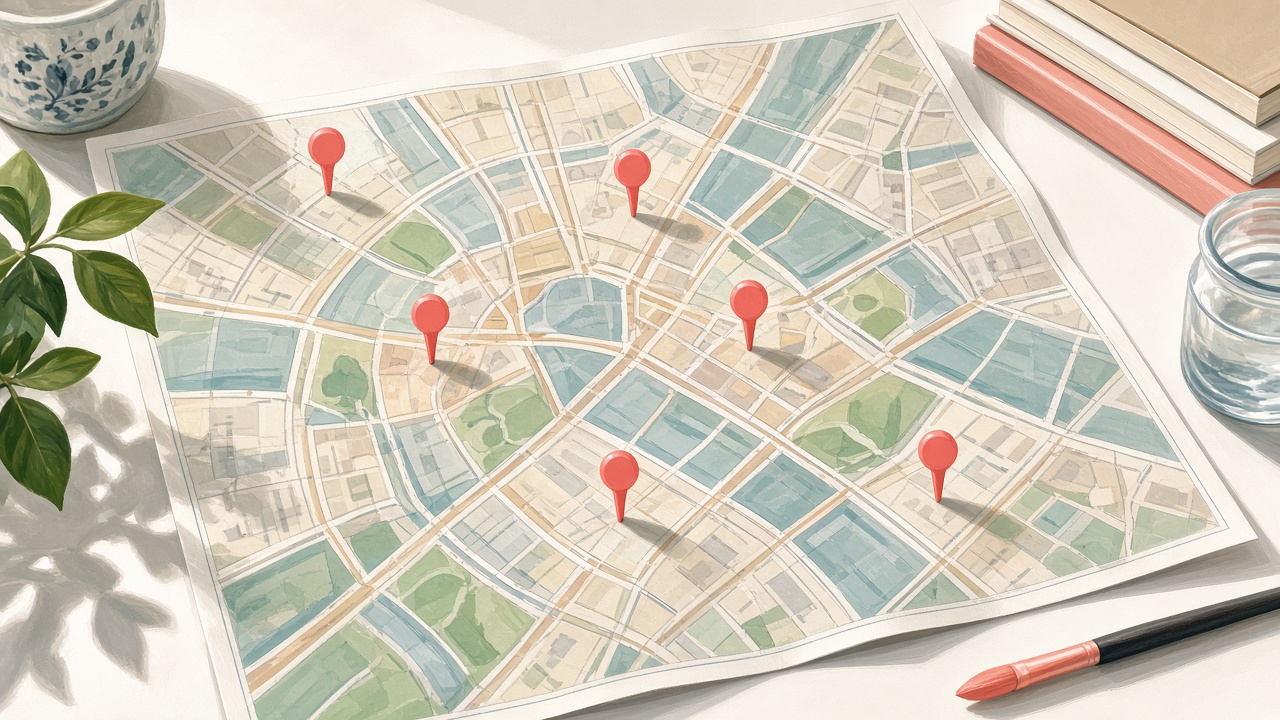
A pin marks a Tokyo locality, not a finished verdict. Asking price may sit beside the pin, but the search still has to show the daily ride, schools a household would use, and whether later buyers exist. Similar prices can hide different mornings and different exits.
Hold a pin only when you can say its job: a ride you would repeat, a school someone would attend, or a pocket other buyers still shop. A pin with no job should leave the map. Too many pins feel busy and bury the choice. The city is Tokyo, Japan, and the region is Tokyo.
How should commute be read on the map?
Judge commute as the journey on a working day, not as the straight distance between two dots. Set the pin against your workplace and time the ride for the hour you really leave. A pin that seems near at noon can still mean a long ride after dark. Write that hour next to the locality.
Use one departure hour for every pin. A pocket that looks quick only on empty streets has not passed. This page prints no official minute table, so the trip you timed is the evidence. Attach it to the pin. A sales line about minutes is not a stand-in for the hour you would depart.
When do schools raise or lower a locality?
Let a school move a pin only when someone in the household would go there. A useful school can outrank a cheaper pin that adds another daily journey. When nobody would attend, the school is decoration and should not lift the pin. The map records a need you have, not a proud leaflet.
Time the school with the same ride. A campus on the far side of the pin can wipe out the travel you hoped to save. Note the school beside the locality only if you would send a child there. Check resale depth after that ride is honest. An unused campus does not excuse a long commute.
What does resale depth say about a quiet area?
Resale depth asks whether another buyer would still want the pocket if you had to leave. A calm street can be a hard exit when almost nobody else is shopping. If you moved away from Tokyo, who would take the home? If no buyer type comes to mind, write that risk on the pin.
This is not an ordering of Tokyo localities from first to last, and no league table is offered. You want more than one interested household. Steady interest makes a later sale more plausible. A pin only you would want is a harder hold, however pleasant the walk. The map names no champion.
Does a filed project pick the neighbourhood for you?
A filing does not choose your neighbourhood. The Legal Affairs Bureau is the registry check for a project, not a map of favoured areas. After you like a locality for commute, schools, and resale depth, use the bureau to see whether the project is filed. That filter comes after the map. It does not draw the shortlist.
A filed project is still not the title deed. The bureau entry does not prove you own a home there, and it does not measure the three tests on the map. Registration and licence tax plus acquisition tax arrives only if you later buy, so leave that headline off the pin comparison until a home is real.
Questions people ask
What should the Tokyo map compare?
Compare commute, schools, and resale depth for localities you would live in. Price can sit beside them but should not replace them. A repeatable ride, a school you would use, and other buyers are the tests. Drop a pin that fails one you need. The map builds a shortlist and does not rank Tokyo.
Are official travel times listed on this page?
No minute count and no ranked table are given. Time the ride you would take and use that same clock time on every pin. A quiet midday look is weak evidence. Write the hour beside the pin. A brochure line about minutes does not replace the journey you would make.
Does a bureau filing pick the neighbourhood?
A filing keeps a project in the file. It is not a reason to prefer the neighbourhood. The Legal Affairs Bureau is a Tokyo registry check. It does not grade schools or resale depth, and the entry is not a title deed. Pick the locality first, then see if the project is filed.
How does JUNO hold this map work?
JUNO on iPhone and web can store the localities you compare. Keep commute, schools, and resale depth on every pin, and drop a pin that fails a test you need. The app holds that shortlist. It does not rank Tokyo, and the duty headline waits until a purchase is real.